828 NE A St, Grants Pass, OR 97526

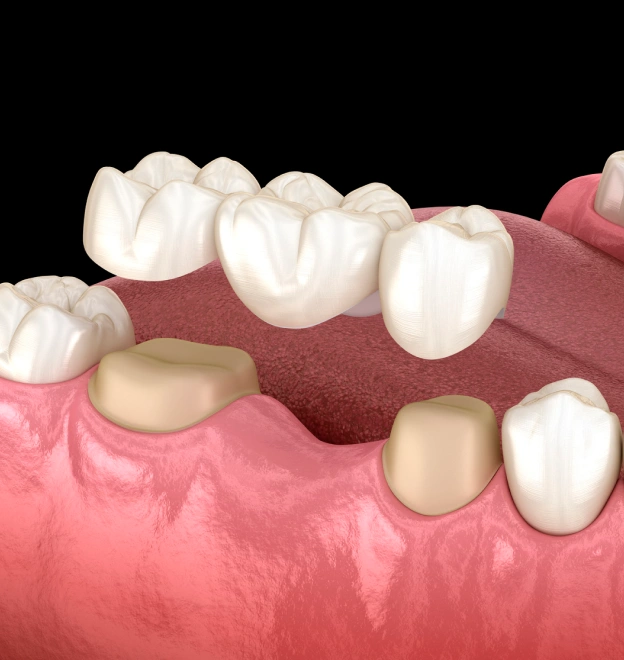
What Is a Dental Bridge?
A dental bridge is a restorative treatment designed to replace one or more missing teeth. True to its name, a bridge literally spans the gap left behind, using two or more crowns on the teeth flanking the space to anchor a false tooth, or pontic, in between. The anchoring teeth are called abutment teeth, and they carry the main support for the bridge. Pontics can be made from gold, metal alloys, porcelain, or a combination of these materials, depending on the tooth's location and your preferences.
At A Street Dental in Grants Pass, we design each bridge to match the shape, color, and fit of your natural teeth, so it restores both function and appearance for patients throughout Southern Oregon, including Josephine County, Myrtle Creek, Canyonville, Selma, and communities along the coast.
Schedule Your Bridge Consultation
Benefits of Dental Bridges
A dental bridge does more than fill a visual gap in your smile. It restores everyday function and helps protect your oral health over the long run. Here's what patients typically notice after treatment:
- Fills the gap left by a missing tooth for a more complete, natural-looking smile.
- Restores your ability to chew comfortably and enjoy a wider variety of foods.
- Helps improve speech that may be affected by missing teeth.
- Prevents neighboring teeth from shifting into the empty space.
- Maintains proper bite alignment and overall oral function.
- Gives you greater confidence when smiling, speaking, and eating.
Types of Dental Bridges
Not every gap calls for the same kind of bridge. Here are the main options we work with:
Traditional Bridge
The most common type, a traditional bridge uses a crown on each healthy tooth next to the gap to anchor a pontic in between. It's a reliable option when both neighboring teeth are strong enough to support crowns.
Cantilever Bridge
Used when there's only a healthy tooth on one side of the gap, a cantilever bridge anchors the pontic to a single abutment tooth. It's recommended less often than a traditional bridge, since it places more strain on that one supporting tooth.
Maryland Bridge
Also called a resin-bonded bridge, this option uses a metal or porcelain framework bonded to the back of the neighboring teeth instead of full crowns. It's a more conservative choice that preserves more natural tooth structure, and it's typically used to replace front teeth.
Implant-Supported Bridge
Rather than relying on natural teeth, an implant-supported bridge is anchored by one or more dental implants. This is often the better option when several teeth in a row are missing, or when the neighboring teeth aren't healthy enough to support a traditional bridge.
Are You a Good Candidate for a Dental Bridge?
A dental bridge works well for many patients, but a few factors help determine whether it's the right fit for your situation:
- One or a Few Missing Teeth in a Row: Bridges are best suited to replacing a small gap rather than several scattered missing teeth.
- Healthy Abutment Teeth: The teeth on either side of the gap need to be strong enough to support crowns, or you may be a better fit for an implant-supported bridge instead.
- Healthy Gums: Active gum disease should be treated first, since it can affect how well the bridge fits and lasts.
- Sufficient Jawbone (for Implant-Supported Bridges): If you're considering an implant-supported option, enough bone density is needed to support the implants involved.
If you're not sure which category you fall into, that's exactly what your consultation is for. We'll examine your teeth and gums and let you know honestly whether a bridge, an implant, or another option makes the most sense.
Ready to Replace Your Missing Tooth?
Whether you're missing one tooth or several in a row, we'll help you figure out whether a bridge, an implant, or another option makes the most sense for you. Reach out to our team today, and we'll walk you through your options with no pressure and no runaround.
Schedule Your Consultation