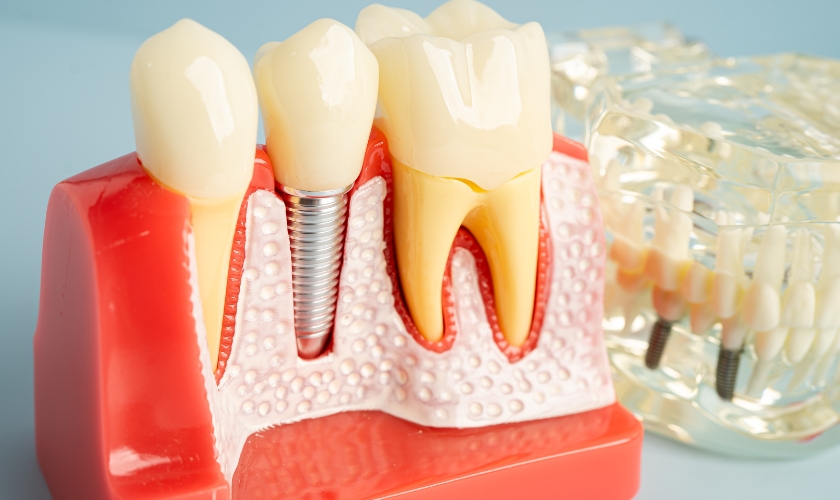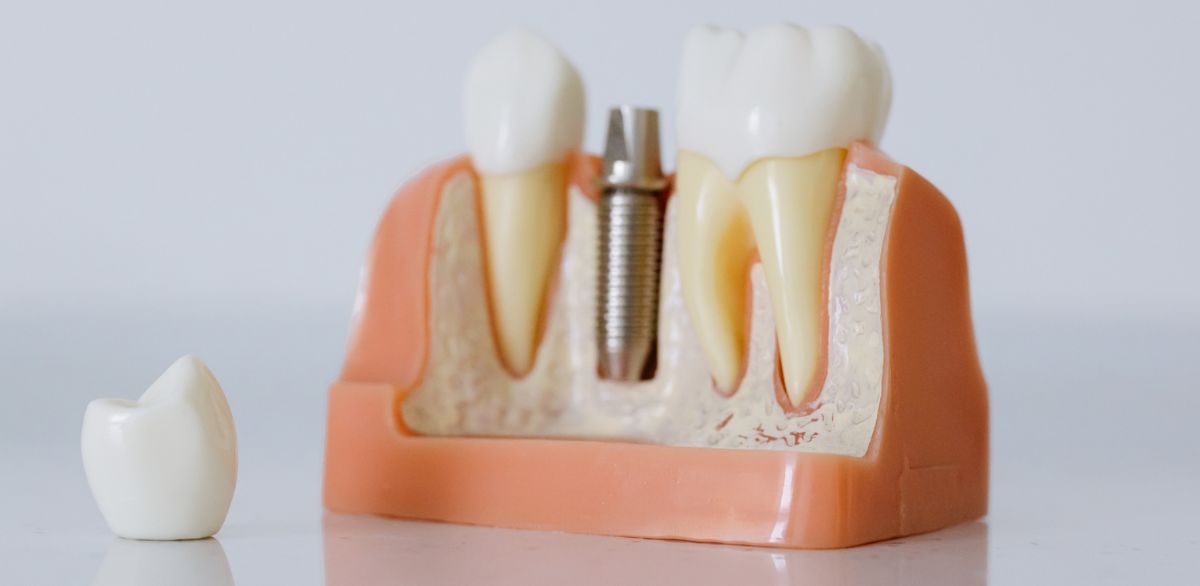

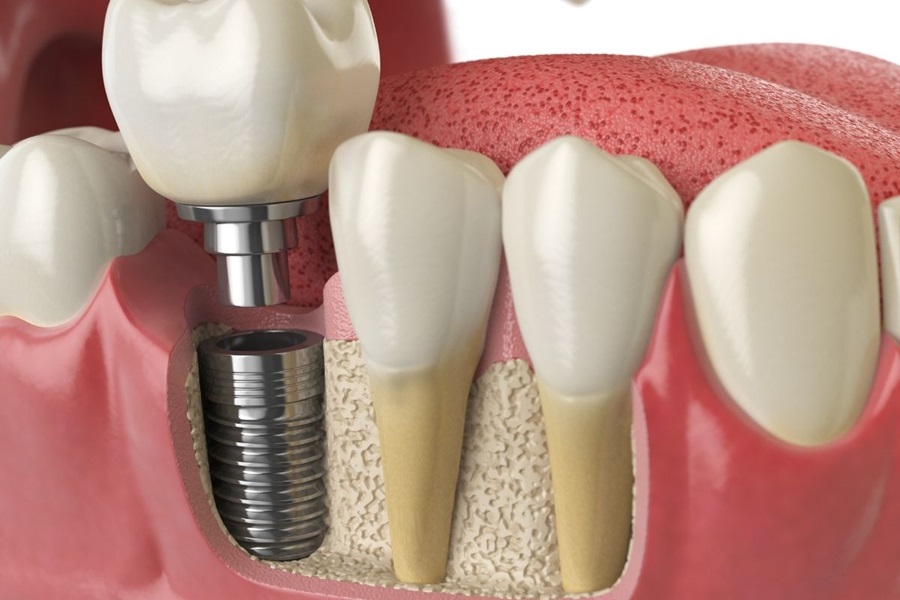
Dental implants are an excellent option for replacing missing teeth and restoring your smile. For many patients, dental implant placement is life-altering, providing a long-term solution for problems caused by missing teeth. However, as with other surgical procedures, it is vital to know the recovery time involved so you can make arrangements accordingly to achieve the best possible results.
This blog will outline the recovery time for dental implant surgery and what to expect during the healing phase. The blog will also offer suggestions on the type of aftercare needed to help you return to your routine with a healthy, functional smile.
Recovering After Dental Implants
The healing process after dental implant surgery comprises several phases. Most patients return to normal activities within a few days after surgery, but complete healing takes time. The healing phase can be divided into three primary stages.
1. The Initial Recovery Phase (First 1-2 Weeks)
- Following dental implants in Grants Pass, you may experience some mild swelling, bruising, and discomfort. These symptoms are considered normal and are part of the natural healing response.
- During this time, make sure to take your prescribed medications and follow your dentist’s instructions to prevent infection.
- You will also need to avoid strenuous activities and remain on a soft-food diet to prevent stress on the implant sites.
2. Osseointegration (Weeks 3-6)
- Osseointegration is a key stage in the healing process, as it is when your dental implant and your jawbone fuse, creating a firm, secure foundation for your implant.
- At this time, it is essential to return to see your dentist for follow-up visits to monitor your healing and to confirm that your implant is integrating properly into your jawbone.
- Soreness and swelling may be present in the implant area, but this is normal and will go away as your body continues to heal. You should contact your dentist if pain becomes intolerable or if you notice any signs of infection.
3. Final Restoration (3-6 Months)
- After your implant is healed, usually about 6 months after surgery, your dentist will place a crown, bridge, or denture on the implant. The final restoration will be attached to the implant.
- Depending on your body’s unique healing process, it may take between 3 and 6 months before your dentist can place the final restoration on the implant.
- After the final restoration is placed, you will have a functional tooth that looks and feels like a natural tooth.
Tips for a Smooth Recovery After Dental Implants
The duration of your dental implant recovery will depend on the individual; however, there are several steps you can take to aid the healing process:
- Follow Your Dentist’s Post-Operative Guidelines: The dentist will provide you with care instructions to reduce pain and prevent complications. Examples include applying ice packs to reduce swelling and using your prescribed pain relief medications.
- Maintain Oral Hygiene: You should likely start gently brushing your dental implants after the first few days of healing. In all cases, follow your dentist’s instructions for keeping your mouth clean while allowing the implants to heal.
- Consume Soft Foods: During your first week post-op, eat only soft foods. Eliminate any foods with a solid consistency or requiring excessive chewing, as they may disturb your healing dental implant area.
- Avoid Tobacco Products and Alcohol: The effects of smoke and alcohol may impede your recovery and increase the risk of developing complications. Therefore, both should be avoided entirely until you have fully healed from your dental implants in Grants Pass.
What to Expect Over the Long Term
After your dental implant surgery, it is vital to see your dentist for regular dental checkups for the coming months. They will check your implant`s health and how well it is healing, and if no complications arise.
- Long-Term Care: Your natural teeth and dental implants require the same long-term care. As you follow your dentist’s instructions, it’s essential to maintain good oral hygiene.
- Checkups and Maintenance: During the appointments, specialists can check whether everything is in place. Your dentist will be able to promptly notice if any parts are loose. Restoration will be adjusted, if necessary.
There are situations in which implants may not function properly, leading to bone leakage. This is rare, and your dentist will guide you through any necessary steps.
Healing from dental implants takes time, but it can be shorter if you take good care of your mouth. Most importantly, the outcome will be a new, lasting smile. Street Dental is dedicated to ensuring you have our support every step of the way during recovery.
Just had dental implants in Grants Pass, or thinking about getting them? Don’t be a stranger; get in touch with us. We aim to give you the smile you’ve always wanted!
FAQs
1. What is the duration of the recovery for dental implants?
After surgery, initial healing will occur in approximately 1 – 2 weeks. It may take 3 – 6 months for the implant to be incorporated into the jawbone through osseointegration.
2. Is the procedure for dental implants painful?
You may experience some discomfort during the procedure and during recovery. However, this discomfort is usually very manageable and can be controlled with medication prescribed by your dentist.
3. Can I go back to work immediately after dental implant surgery?
Depending on how they feel, many patients take a day or two off from work following their dental implants. During the initial recovery period, patients are advised not to participate in heavy physical activity.
4. Are there risks associated with getting dental implants?
Like all surgical procedures, getting dental implants carries some risks, e.g., infection or implant failure. However, the risks associated with dental implants are incredibly low when performed by a qualified dentist with proper care.
5. What should I do to care for my dental implant after the operation?
Follow your dentist’s recommendations after your procedure; these may include taking medications, avoiding certain foods, and gently cleaning the area around your implant.
6. Can you experience implant failure?
Rarely, dental implants may fail due to infection or inadequate bone quality. Since most problems are discovered during regular follow-up appointments with your dentist, follow-up appointments are recommended.
7. Will the dental implants be permanent?
Dental implants are meant to be permanent if you provide proper care; they may last for decades or longer when maintained properly.